
Ransomware Defense Strategies: Protecting Your Business from Encryption Attacks
Ransomware continues to be a major headache for businesses everywhere. It’s that nasty type of cyberattack where malicious software encrypts your data, making it inaccessible, and then demands a payment (a “ransom”) to unlock it. Sometimes, attackers even steal your sensitive data before encrypting it, threatening to leak it if you don’t pay up. This double whammy, known as “double extortion,” adds even more pressure.
Ransomware Defense for Your Business
Recent reports paint a stark picture: ransomware accounted for a staggering 72% of cyberattacks in 2023. And here’s the kicker for businesses like yours: these attacks overwhelmingly target small and mid-sized businesses (SMBs). One study even found that 82% of ransomware incidents hit companies with fewer than 1,000 employees. If you’re an e-commerce platform, a fintech startup, or any other tech-driven SMB, you’re squarely in the crosshairs. The FBI’s 2024 internet crime report also listed extortion (mostly ransomware) among the top three cybercrimes, out of over 859,000 complaints filed that year
Why should you care? For an SMB, even a brief outage can be crippling. Studies show that downtime can cost thousands of dollars per hour for a smaller company. In fact, one analysis found a single hour of downtime can cost SMBs roughly $7,600 to $25,600. If your business grinds to a halt for days, those losses can easily exceed tens of thousands of dollars. For a lean, agile business, that kind of financial hit can be catastrophic. The good news is, with the right strategies in place, you can significantly reduce your risk and ensure a quicker recovery if an attack does occur.
Let’s dive into some practical defense tactics.
1. Back Up, Back Up, Back Up (and Test!)
This is your first and most critical line of defense. If your data is encrypted, having clean, accessible backups means you don’t have to pay the ransom. We recommend following the 3-2-1 rule:
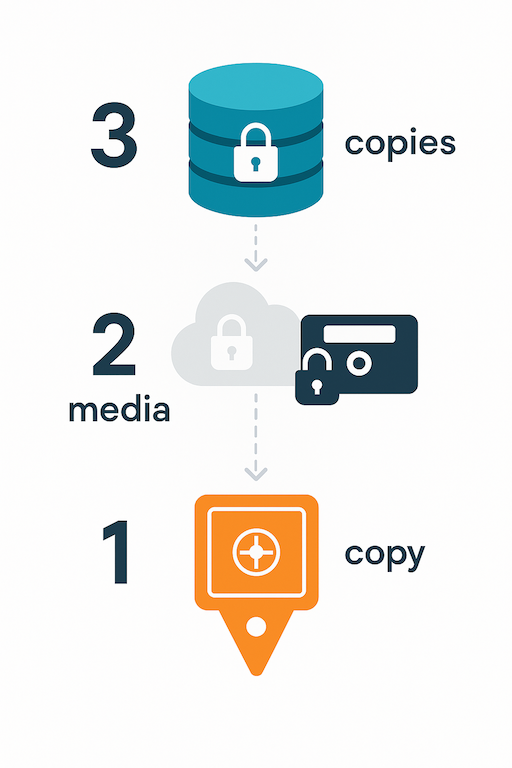
The 3-2-1 Backup Strategy Visually
- 3 copies of your data: This includes your primary data and two backups.
- 2 different media types: Store your backups on different types of storage (e.g., local disk and cloud, or external hard drive and tape).
- 1 offsite copy: Keep at least one copy of your backup data in a separate physical location, disconnected from your main network. This is crucial because if your entire network is compromised, an offsite backup remains safe.
Beyond creating backups, you absolutely must regularly test your recovery procedures. A backup is only as good as your ability to restore from it. Practice restoring data to ensure everything works as expected when you need it most.
2. Segment Your Network
Think of your network as a house. If a burglar gets into one room, you don’t want them to have free reign over the entire house. Network segmentation works similarly. By dividing your network into smaller, isolated segments, you can contain a ransomware infection.
For example, if an employee’s workstation gets infected, proper segmentation can prevent that infection from spreading rapidly to your critical servers, databases, or other endpoints. This significantly limits the damage and makes recovery much more manageable.
3. Keep Systems Patched and Up-to-Date
Ransomware often exploits known vulnerabilities in software and operating systems. Cybercriminals are constantly scanning for these weaknesses. Your job is to close those doors before they can walk through them.
Implement a robust patching strategy. Ensure all your operating systems, applications, and network devices are regularly updated with the latest security patches. Automate this process where possible to reduce manual effort and ensure consistency. This simple step can block many common attack vectors.
4. Train Your Employees
People are often the weakest link in cybersecurity. Phishing emails and malicious links are common delivery methods for ransomware. One click from an unsuspecting employee can compromise your entire organization.
Invest in regular security awareness training for your team. Teach them how to spot suspicious emails, identify malicious links, and understand the dangers of unsolicited attachments. Foster a culture where employees feel comfortable reporting anything that looks out of place. A well-informed team is a powerful defense.
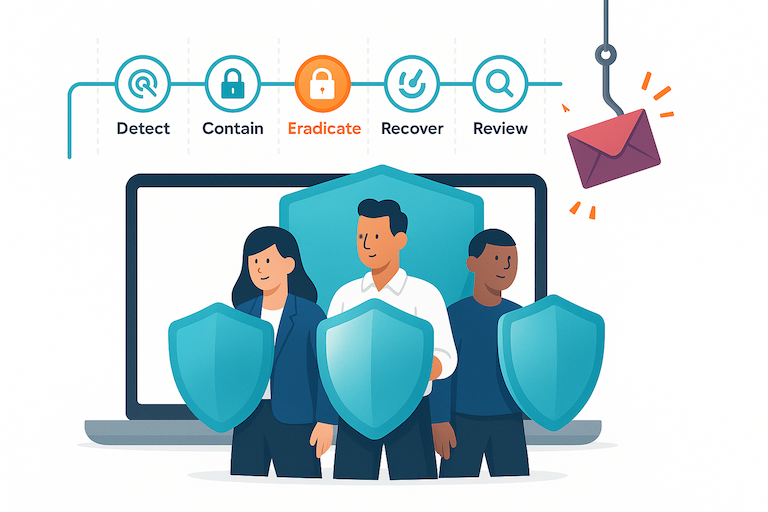
Building a Human Firewall
5. Develop a Ransomware Incident Response Plan
Hope for the best, but plan for the worst. Having a clear, documented incident response plan specifically for ransomware attacks is vital. This plan should outline:
- Detection and Containment: How will you identify an attack? What are the immediate steps to isolate infected machines and prevent further spread?
- Eradication: How will you remove the ransomware from your systems?
- Recovery: How will you restore data from backups and bring systems back online?
- Post-Incident Analysis: What lessons can be learned to prevent future attacks?
- Communication Strategy: Who needs to be informed (employees, customers, legal counsel, regulators)?
Practice this plan with regular drills. Just like a fire drill, knowing what to do when disaster strikes can make the difference between a quick recovery and prolonged business disruption.
Preparedness is Key
Ransomware is a persistent threat, but it’s not insurmountable. By implementing these practical defense strategies – focusing on robust backups, network hygiene, system updates, employee education, and a solid incident response plan – you can significantly bolster your business’s resilience.
Preparedness isn’t an option; it’s a necessity for staying secure in today’s digital landscape.