/blog/images/uplenda-logo.png

The Uplenda Blog

Smart Security Insights for Growing Businesses

Navigating the Global Maze of Data Privacy Laws: What Tech Businesses Need to Know

Data moves across borders faster than ever. For technology-driven businesses—whether you’re a SaaS startup, an e-commerce platform, a digital agency, or a regulated service provider in fintech or healthtech—understanding global data privacy laws isn’t a luxury; it’s a necessity. Even with a lean IT team, staying on top of these regulations is crucial for building trust, avoiding penalties, and ensuring your operations run smoothly.

Let’s unpack some of the most impactful data privacy regulations affecting English-speaking businesses worldwide.
Incident Response Planning: Preparing for the Inevitable

Technology-driven businesses, from nimble SaaS startups to bustling e-commerce platforms and vital healthtech providers, thrive on innovation and speed. You’re building amazing things, often with lean, dedicated teams. But here’s a truth we all need to face: cybersecurity incidents aren’t a matter of “if,” but “when.” It’s not about fear-mongering; it’s about smart, proactive preparation.

For organizations that depend heavily on the cloud, a breach or system outage can feel like a catastrophic event, especially when internal resources are stretched thin. The good news? You don’t need a massive security department to build a robust defense. A well-thought-out incident response (IR) plan is your blueprint for navigating the storm, minimizing damage, and getting back to business quickly.

Multi-Factor Authentication: Your Essential Shield Against Cyber Threats

In today’s digital landscape, the threat of cyberattacks looms large for businesses of all sizes. For technology-driven companies like SaaS startups, e-commerce platforms, digital agencies, and regulated service providers, a breach isn’t just a setback, it can be catastrophic. Many of these organizations operate with lean IT teams, often with a single DevOps expert or IT generalist juggling countless responsibilities. Managing enterprise-grade security tools can feel like an impossible task, leaving critical public-facing assets vulnerable.

Don't Get Hooked: Protecting Your Business from BEC and AI-Powered Phishing

In today’s digital landscape, cyber threats are constantly evolving, and among the most insidious are Business Email Compromise (BEC) and phishing attacks. These social engineering tactics can be devastating, costing businesses billions annually. For small to mid-sized technology-driven businesses, especially those with lean IT teams, understanding and preventing these attacks is crucial.

The Growing Threat of Social Engineering

Attackers are becoming increasingly sophisticated, often impersonating executives, vendors, or trusted partners to trick employees into wiring money, divulging sensitive data, or clicking malicious links. The FBI reported a staggering $2.9 billion lost to BEC, highlighting the financial impact of these scams. Furthermore, data indicates that employees in Small to Medium-sized Businesses (SMBs) face 350% more social engineering attempts than their counterparts in larger firms, making this an even more pressing concern.

Ransomware Defense Strategies: Protecting Your Business from Encryption Attacks

Ransomware continues to be a major headache for businesses everywhere. It’s that nasty type of cyberattack where malicious software encrypts your data, making it inaccessible, and then demands a payment (a “ransom”) to unlock it. Sometimes, attackers even steal your sensitive data before encrypting it, threatening to leak it if you don’t pay up. This double whammy, known as “double extortion,” adds even more pressure.

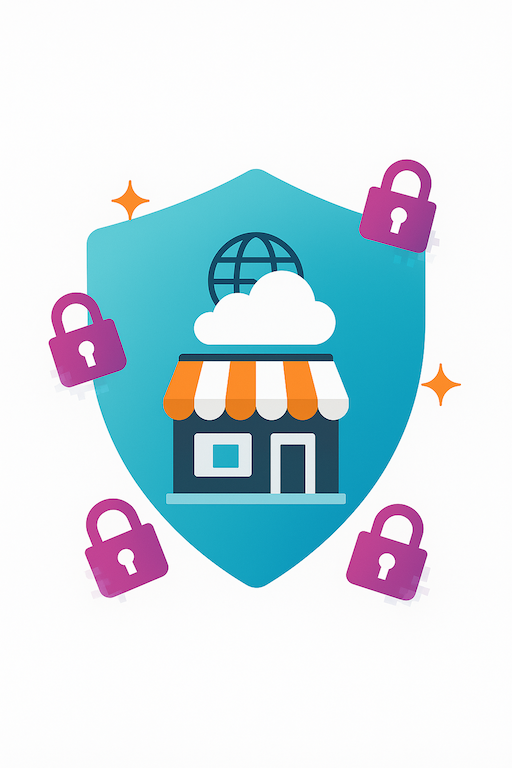
Vector illustration of a online shop protected by a shield, deflecting padlocks with sparks, representing ransomware protection for SMBs.

Ransomware Defense for Your Business

Recent reports paint a stark picture: ransomware accounted for a staggering 72% of cyberattacks in 2023. And here’s the kicker for businesses like yours: these attacks overwhelmingly target small and mid-sized businesses (SMBs). One study even found that 82% of ransomware incidents hit companies with fewer than 1,000 employees. If you’re an e-commerce platform, a fintech startup, or any other tech-driven SMB, you’re squarely in the crosshairs. The FBI’s 2024 internet crime report also listed extortion (mostly ransomware) among the top three cybercrimes, out of over 859,000 complaints filed that year

Shrinking Your Cyber Attack Surface: A Practical Guide for SMBs

When you hear the term “attack surface,” it might sound like something only big corporations need to worry about. But the reality is, every small and mid-sized business has one—and it’s probably bigger than you think. Every new device, app, cloud service, or SaaS application your small business uses could unintentionally open a backdoor for cybercriminals.

But what exactly is your attack surface, and how do you protect it?

What Exactly is an Attack Surface?

Simply put, your attack surface is the total number of ways an attacker can potentially gain access to your systems or data. It’s not limited to your office computers. It includes: