Navigating the Global Maze of Data Privacy Laws: What Tech Businesses Need to Know
Data moves across borders faster than ever. For technology-driven businesses—whether you’re a SaaS startup, an e-commerce platform, a digital agency, or a regulated service provider in fintech or healthtech—understanding global data privacy laws isn’t a luxury; it’s a necessity. Even with a lean IT team, staying on top of these regulations is crucial for building trust, avoiding penalties, and ensuring your operations run smoothly.
Let’s unpack some of the most impactful data privacy regulations affecting English-speaking businesses worldwide.
A Snapshot of Key Data Privacy Regulations
Data privacy isn’t a new concept, but its legal landscape has evolved dramatically. Here’s a quick look at some of the major players:
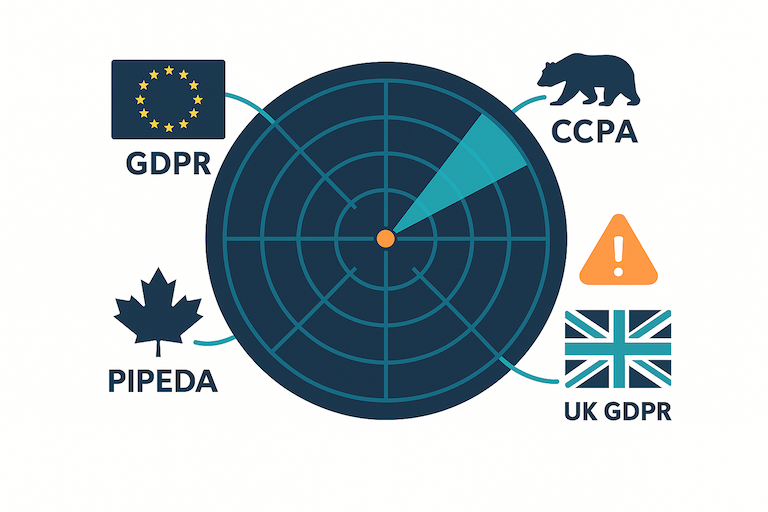
Global data privacy laws at a glance: compliance is a worldwide challenge.
- GDPR (General Data Protection Regulation): This landmark regulation from the European Union (EU) and adopted by the UK post-Brexit sets a high bar for data protection. It grants individuals significant rights over their personal data, including the right to access, rectify, erase, and restrict processing. It applies to any organization processing the personal data of EU/UK residents, regardless of where the organization is located.
- CCPA/CPRA (California Consumer Privacy Act / California Privacy Rights Act): California’s comprehensive privacy law, the CCPA, gives consumers more control over the personal information that businesses collect about them. The CPRA, which built upon the CCPA, strengthened these rights, introducing concepts like the California Privacy Protection Agency (CPPA) and expanding data rights. It primarily impacts businesses that collect personal information from California residents.
- PIPEDA (Personal Information Protection and Electronic Documents Act): Canada’s federal privacy law governs how private sector organizations collect, use, and disclose personal information in the course of commercial activities. It’s built on 10 fair information principles, emphasizing consent, accountability, and accuracy.
- Australia’s Privacy Act 1988: This act includes the Australian Privacy Principles (APPs), which outline how Australian government agencies and most private sector organizations must handle personal information. It covers collection, use, disclosure, quality, and security of personal data.
- Emerging Laws: Beyond these, new privacy laws are continually emerging. For instance, the Virginia CDPA (Consumer Data Protection Act) is another example in the US, reflecting a growing trend of states enacting their own privacy legislation, often with similarities to GDPR or CCPA.
The Global Shift Towards Stricter Data Rights
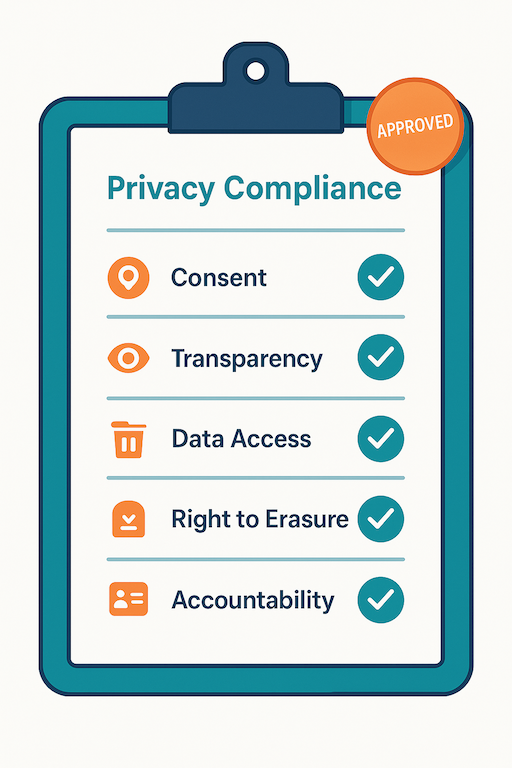
A privacy-first strategy starts with meeting core compliance principles.
One undeniable trend is the increasing stringency of data privacy regulations worldwide. The GDPR, in particular, has become a global benchmark. Many new laws, even those outside the EU, draw inspiration from its comprehensive approach to individual data rights. This means we’re seeing a consistent push towards greater transparency, more robust consent mechanisms, and enhanced control for individuals over their personal information. It’s a clear signal that data privacy is no longer a niche concern but a fundamental expectation.
Embracing a “Privacy-First” Approach
Given this complex and evolving landscape, what’s the best strategy for your business? We recommend adopting a “privacy-first” approach. This means treating all customer data under the strictest applicable law by default. If you handle data from EU residents, even if your primary operations are in North America, consider making your data practices GDPR-compliant across the board.
Why? Because it simplifies compliance significantly. Instead of trying to manage different standards for different geographies, you establish a high baseline that likely satisfies most, if not all, requirements. This proactive stance not only reduces your risk but also builds greater trust with your customers, who appreciate knowing their data is handled with the utmost care.
Navigating International Data Transfers
When you’re operating globally, data doesn’t always stay put. Transferring personal data across borders, especially from regions with strict privacy laws like the EU, requires careful consideration. For example, transferring personal data out of the EU or UK often necessitates specific safeguards.
Mechanisms like Standard Contractual Clauses (SCCs) are common tools. These are pre-approved contractual clauses designed to ensure that personal data transferred outside the EU/UK receives an equivalent level of protection. Some countries or regions also have “adequacy decisions,” meaning the EU has determined that their data protection laws provide an adequate level of protection, simplifying transfers to those areas. Understanding these mechanisms is vital for any business dealing with international data flows.
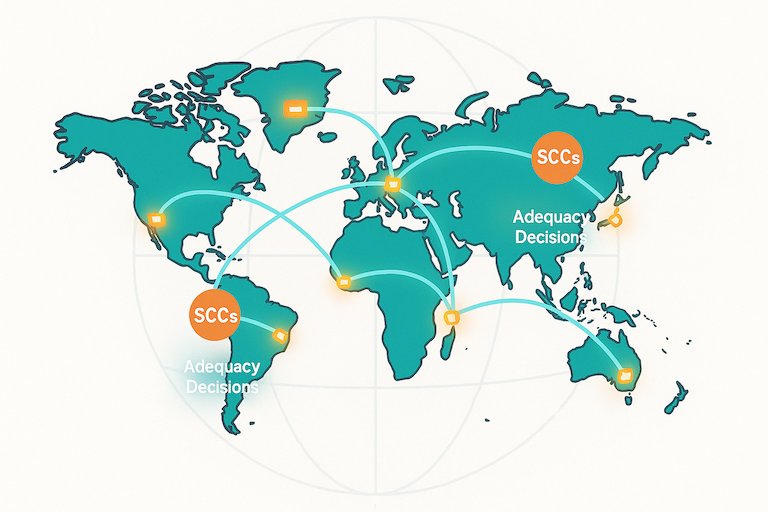
Data never sleeps or stays local. International privacy law requires careful handling of cross-border transfers.
The Extraterritorial Reach of Privacy Laws
Here’s a critical point many businesses overlook: even if your company operates exclusively in one country, you may still be subject to the privacy laws of other nations. Many modern data privacy regulations, including GDPR, have an “extraterritorial” reach. This means they apply based on the citizenship or residency of the individual whose data you are processing, not solely on your business’s physical location.
For example, an e-commerce company based in the US that sells products to customers in Germany will likely need to comply with GDPR for the data of those German customers. This global reach highlights why a comprehensive understanding of these laws, and a robust privacy framework, is so important for any tech business with an international customer base or even visitors from abroad.
Staying Ahead in the Privacy Game
The world of data privacy is dynamic, with new laws and amendments continually emerging. For small to mid-sized tech businesses with lean teams, staying compliant can feel like a daunting task. However, by understanding the core principles behind these laws, embracing a privacy-first mindset, and recognizing the global nature of data, you’re well on your way to building a secure and compliant operation. Prioritizing data privacy isn’t just about avoiding penalties; it’s about fostering trust, protecting your reputation, and securing your future in the digital economy.